
The Truth About Glass Frogs: See-Through Skin Revealed
By Trivia Daily, Staff Writer — Published October 4, 2026
Table of Contents
- Key Takeaways
- The Science Behind the Transparency: Interesting Facts Glass Frogs Keep Hidden
- Discover Where Glass Frogs Live and How They Survive
- Explore the Surprising Parenting Habits
- Glass Frog Species: A Comparison
- Frequently Asked Questions
Hidden in the cloud forests of Central and South America, a tiny amphibian performs one of nature’s most astonishing disappearing acts. Glass frogs earned their name honestly: their bellies are so transparent that you can peer straight through their skin and watch their internal organs at work. This isn’t a magic trick or evolutionary accident—it’s a sophisticated survival strategy that scientists are only beginning to understand. The truth about glass frogs reveals one of the animal kingdom’s most surprising adaptations, a curiosity that challenges everything we think we know about camouflage.
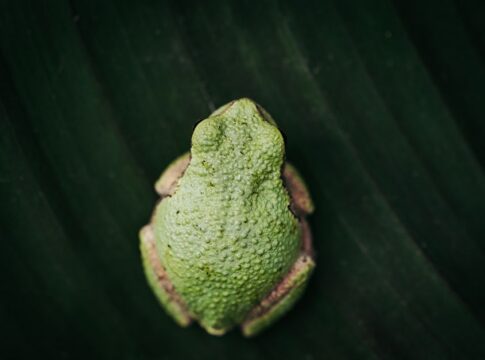
These remarkable creatures measure just an inch or two in length, but what they lack in size they make up for in sheer biological wonder. While their backs typically wear a lime-green coat to blend with leaves, flip one over and you’ll discover something amazing: translucent tissue that offers a window into their living anatomy.
Key Takeaways
- Glass frogs possess transparent skin on their bellies, allowing observers to see their beating hearts, liver, digestive tract, and even developing eggs in females.
- Over 150 species of glass frogs exist, primarily inhabiting the rainforests of Central and South America, from southern Mexico to Bolivia.
- The transparency serves as camouflage—when resting on leaves, the see-through belly reduces the frog’s visible outline, making it harder for predators to spot from below.
- Recent research discovered that some glass frog species can hide nearly 90% of their red blood cells in their liver while sleeping, making themselves even more transparent.
- Male glass frogs are devoted fathers, guarding clutches of eggs laid on leaves overhanging streams until tadpoles hatch and drop into the water below.
- Despite their delicate appearance, glass frogs are skilled climbers with enlarged toe pads that help them navigate the rainforest canopy.
The Science Behind the Transparency: Interesting Facts Glass Frogs Keep Hidden
Most vertebrates are opaque. Our bodies, like those of most animals, contain layers of skin cells, pigments, and tissues that block light. Glass frogs break this rule spectacularly. Their abdominal skin lacks the usual pigmentation and contains fewer light-scattering particles. The tissue is thin enough and clear enough that light passes through with minimal distortion.
But here’s where it gets truly fascinating: transparency isn’t uniform across all glass frog species. Some reveal almost everything inside. Others show only hints of their organs. The family Centrolenidae encompasses all glass frog species, and each has evolved slightly different levels of translucency depending on their specific habitat and predation pressures.
Scientists studying these amphibians face an interesting challenge. The very trait that makes glass frogs remarkable also makes them incredibly difficult to study in the wild. Their camouflage works so well that researchers sometimes spend hours searching for individuals they know are present. When a glass frog presses its transparent belly against a leaf, it essentially erases its shadow and outline—the two visual cues predators typically use to identify prey.
The Blood Cell Mystery
In 2022, researchers made a startling discovery about one glass frog species. When these frogs sleep, their red blood cells nearly vanish from circulation. Using specialized imaging techniques, scientists found that the frogs pack roughly 89% of their red blood cells into their liver, which has a mirrored coating that prevents the cells from being visible through the skin. This biological magic trick makes the sleeping frog appear even more ghostly and transparent.
The mechanism remains under investigation, but it represents a form of active camouflage unlike anything previously documented in vertebrates. When the frog wakes and becomes active, the blood cells return to circulation within minutes. How the frog accomplishes this without suffering from oxygen deprivation or blood clots continues to puzzle researchers.
Discover Where Glass Frogs Live and How They Survive
Glass frogs are creatures of moisture and elevation. They thrive in montane and lowland rainforests, typically near streams and rivers. The constant humidity of cloud forests provides ideal conditions—these frogs need wet environments to keep their permeable skin moist.
Different species occupy different ecological niches:
- Some prefer high-elevation cloud forests above 6,500 feet, where cool temperatures and persistent mist create perpetual dampness.
- Others inhabit lowland tropical rainforests, living among the vegetation along slow-moving streams.
- Most species are nocturnal, emerging after dark to hunt for small insects, spiders, and other invertebrates.
- During the day, they rest on the undersides of leaves, their transparent bellies pressed against the green surface.
Their distribution stretches across a vast range, but habitat loss poses a significant threat. Deforestation in Central and South America has fragmented the continuous forest these frogs require. Many species have extremely limited ranges, sometimes restricted to a single mountain range or watershed.
Explore the Surprising Parenting Habits
Glass frogs demonstrate remarkable parental care, particularly the males. After a female lays her clutch of eggs on a leaf overhanging water, the male takes over. He guards the eggs vigilantly, sitting on or near them for weeks. This isn’t passive babysitting—the male actively defends against predators, including wasps, flies, and other frogs that might consume the eggs.
The eggs themselves are partially transparent, allowing observers to watch the tadpoles develop inside. When the tadpoles finally hatch, they drop from the leaf into the stream below, where they continue developing. This strategy keeps the vulnerable eggs away from aquatic predators while also protecting them from many terrestrial threats.
Male glass frogs also call to attract females, producing high-pitched whistles and chirps that can be heard near streams on rainy nights. Competition for prime egg-laying sites can be fierce, and males sometimes engage in wrestling matches, grappling with rivals while clinging to vegetation.
Glass Frog Species: A Comparison
| Species | Transparency Level | Geographic Range | Notable Features |
|---|---|---|---|
| Fleischmann’s Glass Frog | Moderate | Central America to Venezuela | Most widespread species; lime-green with yellow spots |
| Reticulated Glass Frog | High | Ecuador and Colombia | Extremely transparent; organs clearly visible |
| Limon Giant Glass Frog | Low to Moderate | Costa Rica and Panama | Largest glass frog species; less transparent than relatives |
| La Palma Glass Frog | Very High | Colombia | One of the most transparent species; heart easily observed |
Frequently Asked Questions
Can you actually see a glass frog’s heart beating?
Yes, in many glass frog species, the heart is clearly visible through the transparent abdominal skin, and you can watch it beat in real time. The heart appears as a small red organ pumping rhythmically beneath the skin.
Are glass frogs poisonous or dangerous to humans?
No, glass frogs are not poisonous and pose no danger to humans. Unlike some brightly colored rainforest frogs that secrete toxins, glass frogs rely on camouflage rather than chemical defenses for protection.
Why aren’t glass frogs completely transparent?
Complete transparency is nearly impossible for vertebrates because certain structures—like bones, eyes, and some organs—cannot be made transparent without losing their function. Glass frogs achieve the maximum transparency possible while maintaining vital physiological processes.
How do glass frogs avoid being eaten if they’re so small and delicate?
Their transparency provides excellent camouflage against leaves, making them difficult for predators to detect from below. They also remain motionless during the day and are most active at night when visual predators are less effective.
The next time you encounter a glass frog—whether in a documentary, a zoo exhibit, or on a lucky rainforest expedition—take a moment to appreciate the evolutionary journey that produced such an improbable creature. In a world where most animals invest in armor, toxins, or speed, these tiny frogs chose invisibility. And somehow, against all odds, it worked.