
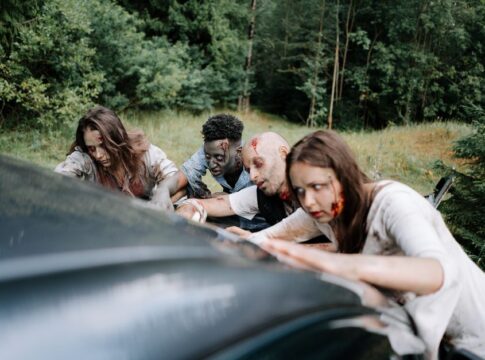
The Truth About Zombie Stories Starting in Haitian Voodoo
By Trivia Daily, Staff Writer — Published November 3, 2026
Table of Contents
- Key Takeaways
- The Truth About Zombie Stories and Their Chemical Origins
- Zombification as Social Control
- How Haiti’s Zombies Became Hollywood’s Monsters
- Comparing Traditional Zonbi and Modern Zombies
- The Science and Skepticism
- Frequently Asked Questions
When you think of zombies, Hollywood’s flesh-eating hordes probably come to mind. But the truth about zombie stories reveals a far more fascinating—and real—origin. Long before movie screens filled with the undead, Haitian Vodou practitioners spoke of “zonbi”: not monsters craving brains, but living people stripped of their will through a terrifying combination of pharmacology, psychology, and cultural belief. This surprising intersection of chemistry, spirituality, and social control offers some of the most interesting facts in folklore history.
The zombie myth didn’t begin in a writer’s imagination. It emerged from actual Haitian communities where certain individuals—often bokor, or Vodou sorcerers—allegedly possessed the knowledge to create mindless servants. These weren’t supernatural creatures but victims of a calculated process that left them appearing dead, then “resurrected” in a compliant, trance-like state.
Key Takeaways
- Haitian “zonbi” were believed to be real people controlled through powder containing tetrodotoxin, a neurotoxin found in pufferfish that can create a death-like state
- The zombie concept served as social control in Haitian communities, with the threat of zombification discouraging those who violated cultural norms
- Western zombie fiction emerged in the 1920s-1930s when American military occupation of Haiti exposed writers to Vodou practices
- Scientific investigation in the 1980s examined the pharmacological basis of zombie creation, though findings remain debated
- Modern zombie entertainment bears almost no resemblance to the original Haitian zonbi, who were slow, docile, and controlled by a master
- The transformation from cultural phenomenon to pop culture monster reflects broader patterns of how Western media adapts non-Western spiritual practices
The Truth About Zombie Stories and Their Chemical Origins
The zonbi of Haitian tradition wasn’t a reanimated corpse in the supernatural sense. According to Haitian belief and ethnobotanical research, a bokor could administer a carefully prepared powder to a victim. This powder allegedly contained tetrodotoxin, one of nature’s most potent neurotoxins, found in pufferfish and certain other marine creatures. In precise doses, tetrodotoxin can slow metabolism and breathing to nearly imperceptible levels, creating a convincing appearance of death.
The victim would be buried, then exhumed hours or days later. Deprived of oxygen, potentially brain-damaged, and administered psychoactive compounds like those from datura plants, the person might emerge in a confused, suggestible state. Combined with the psychological trauma of being buried alive and the powerful cultural belief in zombification, victims could remain in a compliant, zombie-like condition.
Ethnobotanist Wade Davis investigated these claims in Haiti during the 1980s, examining the pharmacological components of zombie powders. While his work generated controversy in scientific circles—particularly regarding whether the compounds could reliably produce the described effects—it brought serious academic attention to what had previously been dismissed as pure superstition. The National Geographic Society supported some of this research, recognizing the cultural and scientific significance of these practices.
Zombification as Social Control
Beyond the chemistry lies an equally fascinating truth: zombification functioned as a powerful tool of social regulation. In Haitian communities, the threat of becoming a zonbi served to enforce behavioral norms and punish serious transgressions. Those who violated community standards, committed crimes, or challenged social hierarchies faced the terrifying possibility of losing their autonomy forever.
This wasn’t random violence. The zombie belief system operated within specific cultural contexts. Haitian Vodou encompasses complex spiritual and social structures, and the bokor—though often portrayed negatively in Western accounts—held recognized positions within these communities. The fear of zombification reinforced social cohesion in ways that formal legal systems might in other societies.
The zonbi represented a fate worse than death: eternal servitude without will, consciousness, or hope of escape. Unlike death, which in Vodou belief leads to the spirit joining the ancestors, zombification meant the soul was captured, preventing its natural journey. This spiritual dimension made the threat particularly potent in communities where Vodou provided the primary framework for understanding life, death, and the cosmos.
How Haiti’s Zombies Became Hollywood’s Monsters
The United States occupied Haiti from 1915 to 1934. American military personnel, journalists, and travelers returned with stories of Vodou ceremonies and zombie legends. These accounts, often sensationalized and filtered through racist colonial attitudes, found eager audiences in a United States fascinated by “exotic” cultures.
William Seabrook’s 1929 book The Magic Island introduced many English-speaking readers to Haitian zombies. Early films quickly followed, including White Zombie in 1932, featuring Bela Lugosi as a sinister controller of zombie servants. These early portrayals maintained some connection to the Haitian original: zombies were slow, mindless laborers controlled by a master, not independent monsters.
The transformation accelerated over subsequent decades. George Romero’s 1968 film Night of the Living Dead revolutionized the concept, creating flesh-eating ghouls that spread their condition through bites—a complete departure from Haitian tradition. This new zombie became a metaphor for consumerism, conformity, nuclear anxiety, and countless other modern fears. The original cultural and spiritual context vanished almost entirely from popular consciousness.
Comparing Traditional Zonbi and Modern Zombies
| Characteristic | Haitian Zonbi | Modern Pop Culture Zombie |
|---|---|---|
| Origin | Created by bokor through powder and ritual | Virus, infection, or supernatural plague |
| Behavior | Docile, obedient, performs labor | Aggressive, violent, seeks to consume flesh |
| Speed | Slow, shuffling movement | Varies from slow to running (depending on version) |
| Control | Controlled by a master | Independent or part of mindless horde |
| Transmission | Does not spread; individually created | Spreads through bites or bodily fluids |
| Cultural Function | Social control and spiritual punishment | Entertainment and metaphor for social anxieties |
The Science and Skepticism
Scientific examination of zombie claims has produced mixed results. While tetrodotoxin unquestionably exists and can produce death-like states, questions remain about whether the compounds in zombie powders appear in sufficient concentrations to reliably create the described effects. Variables in preparation, dosage, and individual physiology would make consistent results difficult to achieve.
Some researchers argue that psychological and cultural factors explain more than pharmacology. The expectation of zombification, combined with social isolation and the trauma of burial, might produce the observed symptoms even without perfectly calibrated neurotoxins. The power of belief—particularly in communities where Vodou provides the interpretive framework for unusual experiences—shouldn’t be underestimated.
What remains undisputed is that people in Haiti have been identified as zombies by their communities and families. Whether the mechanism is primarily chemical, psychological, or some combination, the phenomenon has real social existence. Dismissing these accounts as pure fiction ignores the documented experiences of Haitian people and the complex cultural systems that give zombification meaning.
Frequently Asked Questions
Are Haitian zombies real?
Haitian communities have documented cases of individuals identified as zombies—people who appeared to die, were buried, then reappeared in altered mental states. While the exact mechanisms remain debated, the social and cultural phenomenon is real, even if the supernatural elements aren’t scientifically verified.
What is tetrodotoxin and how does it relate to zombies?
Tetrodotoxin is a powerful neurotoxin found in pufferfish and some other animals that can dramatically slow metabolism and breathing. Researchers have found it in some samples of Haitian zombie powder, where it could theoretically create a death-like state that mimics the first stage of zombification.
When did zombies first appear in American popular culture?
Zombies entered American popular culture in the 1920s and 1930s, following U.S. military occupation of Haiti. William Seabrook’s 1929 book and the 1932 film White Zombie introduced these concepts to wider audiences, though they bore more resemblance to Haitian tradition than modern zombie fiction does.
Why are modern zombies so different from the original concept?
Modern zombies evolved as Western filmmakers and writers used the concept as a metaphor for various social anxieties, stripped of cultural context. The transformation from individually controlled servants to infectious hordes reflects changing fears about disease, loss of individuality, and social collapse rather than the original Haitian spiritual and social functions.
The next time you watch a zombie film, remember that beneath the gore and apocalyptic scenarios lies a genuine cultural tradition—one where chemistry, psychology, and spiritual belief intersected in ways that still spark curiosity and debate. The distance between Hollywood’s monsters and Haiti’s zonbi reveals how stories transform when they cross cultural boundaries, sometimes losing their original truth entirely.