
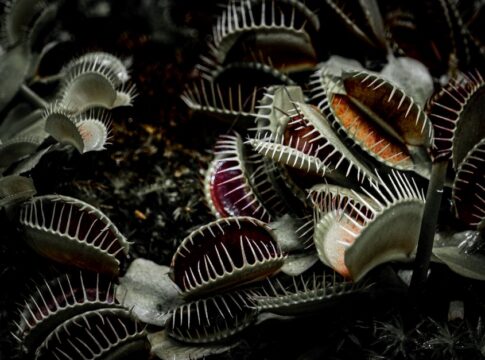
9 Strange Facts About Venus Flytraps Counting Touch Signals
By Trivia Owl, Staff Writer — Published November 16, 2026
Table of Contents
- Key Takeaways
- The Most Interesting Strange Venus Flytraps Counting System
- Nine Surprising Discoveries About Venus Flytrap Biology
- Comparing Venus Flytraps to Other Carnivorous Plants
- The Science Behind Plant Memory and Counting
- Conservation Status and Human Impact
- Frequently Asked Questions
The Venus flytrap doesn’t just snap shut on anything that brushes its leaves. This carnivorous plant counts. It tallies mechanical stimuli with remarkable precision, ensuring it only expends energy on genuine prey rather than falling raindrops or windblown debris. Among the most fascinating and strange venus flytraps facts is this ability to perform rudimentary mathematics without a brain or nervous system, a discovery that has captivated botanists and trivia enthusiasts alike.
Native to a small region of North and South Carolina, these botanical curiosities have evolved one of nature’s most sophisticated trapping mechanisms. What appears to be simple reflex is actually a complex series of electrical and chemical signals that rival some animal behaviors in their intricacy.
Key Takeaways
- Venus flytraps require two touches within about 20 seconds to trigger their trap, effectively counting mechanical stimuli to avoid false alarms.
- The plant generates electrical signals called action potentials, similar to nerve impulses in animals, despite having no nervous system.
- Each trap can only close a limited number of times before it dies, making the counting mechanism essential for survival.
- The digestive process begins only after five or more touches confirm struggling prey is inside the closed trap.
- Venus flytraps grow naturally in only a tiny area of coastal wetlands in the Carolinas and nowhere else on Earth.
- The trap snaps shut in less than a tenth of a second, making it one of the fastest movements in the plant kingdom.
The Most Interesting Strange Venus Flytraps Counting System
The Venus flytrap’s counting ability centers on tiny trigger hairs inside each trap. When an insect brushes against one of these hairs, the plant generates an electrical signal. But here’s where it gets remarkable: a single touch does nothing. The plant waits. Only when a second hair is touched—or the same hair is touched again—within approximately 20 seconds does the trap spring shut.
This two-touch minimum acts as a sophisticated filter. Rain doesn’t count. Falling twigs don’t trigger closure. The system demands repeated stimulation, the kind only a moving creature provides. Scientists have measured these electrical impulses and found they propagate through the plant’s tissue at speeds comparable to some animal nerve signals, though the mechanism relies on ion channels in plant cells rather than neurons.
But the counting doesn’t stop at two. Once the trap closes, the plant continues tallying touches. If the struggling prey triggers the hairs three, four, or five more times, the trap tightens further and the digestive process begins. Fewer touches? The trap may reopen within a day, having determined the catch wasn’t worth the metabolic investment. This multi-stage counting system represents one of the most sophisticated stimulus-response mechanisms in the plant world.
Nine Surprising Discoveries About Venus Flytrap Biology
1. Each Trap Functions as a Counting Computer
The trap lobes contain specialized cells that accumulate electrical charge with each mechanical stimulus. When the charge reaches a threshold after the second touch, calcium ions flood the cells, causing rapid water movement that snaps the trap shut. This biochemical calculator operates without anything resembling a brain, using purely electrochemical gradients to perform addition and comparison operations that determine whether prey is present.
2. The Closing Speed Defies Plant Stereotypes
Venus flytraps close in approximately one-tenth of a second, moving faster than most people can blink. This speed requires the plant to store elastic energy in the trap’s leaf structure, similar to how a mousetrap stores energy in a spring. The rapid closure happens when cells on the trap’s outer surface suddenly elongate while inner cells remain static, creating a snap-buckling effect that physicists have studied extensively.
3. Traps Have a Limited Lifespan Measured in Closures
Each individual trap can only close between three and twelve times during its life before it dies and blackens. This limitation makes the counting mechanism absolutely critical—wasting a closure on a false alarm brings the trap one step closer to retirement. The plant must balance aggressive hunting with conservation of its precious, finite trapping resources.
4. Wild Populations Exist in Only Two States
Despite their fame and widespread cultivation, Venus flytraps grow naturally only within a roughly 75-mile radius around Wilmington, North Carolina, extending slightly into South Carolina. This incredibly restricted native range makes them one of the most geographically limited plants in North America. Habitat loss and poaching have placed wild populations under significant pressure, though cultivated plants remain common in the horticultural trade.
5. The Digestive Process Requires Continued Counting
After the initial closure, the plant keeps counting touches from struggling prey. Around the fifth touch, the trap seals completely and begins secreting digestive enzymes. The more the prey struggles, the more enzymes the plant produces, optimizing its digestive effort to match the size and protein content of its catch. This proportional response demonstrates a level of sensory sophistication rarely seen in plants.
6. They Thrive in Nutrient-Poor Soil
Venus flytraps evolved carnivory as an adaptation to the nitrogen-poor, acidic bogs of the Carolina coastal plain. The insects they digest provide essential nutrients—particularly nitrogen and phosphorus—that the sandy, nutrient-depleted soil cannot supply. Ironically, fertilizing Venus flytraps often kills them, as they’ve adapted to thrive precisely where other plants struggle.
7. Electrical Signals Travel Through Leaf Tissue
When a trigger hair bends, it generates an action potential that propagates across the trap at speeds reaching several centimeters per second. Researchers have inserted electrodes into Venus flytrap tissue and recorded these signals, which resemble simplified versions of animal nerve impulses. The discovery has fascinated neurobiologists and plant physiologists alike, blurring the line between plant and animal sensory systems.
8. Traps Can Distinguish Prey Size Through Touch Frequency
The counting mechanism allows the plant to gauge prey size and vigor. A large, vigorously struggling insect triggers many touches in rapid succession, prompting full digestive activation. A tiny insect or piece of debris may trigger only one or two touches, leading to trap reopening. This size-discrimination ability helps the plant allocate digestive resources efficiently, maximizing nutritional return on metabolic investment.
9. They Produce White Flowers on Tall Stalks
Venus flytraps bloom in late spring, sending up flower stalks that can reach 12 inches or more—well above the trap leaves. This separation prevents pollinators from becoming prey, ensuring the plant can reproduce sexually while still capturing food. The flowers themselves are small, white, and five-petaled, bearing little resemblance to the famous traps below.
Comparing Venus Flytraps to Other Carnivorous Plants
| Plant Type | Trapping Method | Closure Speed | Active vs. Passive |
|---|---|---|---|
| Venus Flytrap | Snap trap | 0.1 seconds | Active (requires energy) |
| Sundew | Sticky adhesive | Minutes to hours | Semi-active |
| Pitcher Plant | Pitfall trap | N/A (passive) | Passive (no movement) |
| Bladderwort | Suction trap | 0.002 seconds | Active (fastest known) |
The Science Behind Plant Memory and Counting
The Venus flytrap’s counting ability raises profound questions about plant cognition and memory. The 20-second window between touches requires the plant to “remember” the first stimulus while waiting for confirmation. This short-term memory operates through the gradual decay of electrical potential in the trap’s cells—if the second touch arrives before the charge dissipates completely, the threshold is reached and closure occurs.
Research has shown that environmental factors affect counting accuracy. Temperature influences the electrical signals’ propagation speed and decay rate, meaning Venus flytraps in cooler conditions may require touches closer together in time. The plant essentially performs time-sensitive integration of mechanical signals, a computational task accomplished through elegant biochemistry rather than neurons or synapses.
Conservation Status and Human Impact
Wild Venus flytraps face mounting threats despite their fame. Habitat destruction from development and fire suppression has reduced their native range significantly. Poaching remains a persistent problem—people dig up wild plants for sale or personal collections, damaging fragile bog ecosystems in the process. North Carolina has made poaching Venus flytraps a felony, recognizing the severity of the threat to wild populations.
Fortunately, tissue culture and seed propagation have made cultivated Venus flytraps widely available and affordable. Buying nursery-grown plants rather than wild-collected specimens helps protect remaining natural populations while allowing enthusiasts to grow these fascinating organisms at home.
Frequently Asked Questions
How many times can a Venus flytrap close before it dies?
Each individual trap can close between three and twelve times during its lifespan before it exhausts its energy reserves and dies. The entire plant produces new traps continuously, so while individual traps have limited closures, the plant itself can live for many years.
Can Venus flytraps count higher than two?
Yes, Venus flytraps continue counting touches after closure, using the total count to determine digestive enzyme production. They can distinguish between five or more touches (indicating substantial prey) and fewer touches (suggesting false alarms or small catches not worth digesting).
Do Venus flytraps need to eat insects to survive?
No, Venus flytraps can survive through photosynthesis alone, but they grow much more slowly and weakly without insect prey. The nutrients from digested insects supplement their diet, allowing robust growth in nutrient-poor environments where they face less competition from other plants.
Why don’t Venus flytraps close when it rains?
Raindrops typically hit only one trigger hair at a time and don’t provide the repeated stimulation within the required time window. The two-touch counting mechanism effectively filters out single, random impacts from environmental factors like rain, wind-blown debris, or falling leaves.
The Venus flytrap’s ability to count, remember, and make decisions about when to spring its trap reveals just how sophisticated plant behavior can be. Without a single neuron, this botanical marvel performs calculations that ensure its survival in one of nature’s most challenging environments—a reminder that intelligence takes many forms across the living world.