
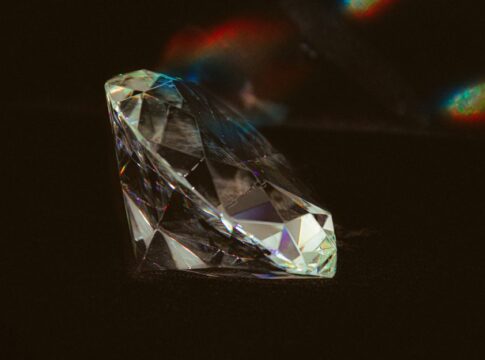
The Truth About Diamonds Being Made From Ancient Carbon
By Trivia Daily, Staff Writer — Published November 7, 2026
Table of Contents
- Key Takeaways
- The Truth About Diamonds Made Deep Underground
- How Diamonds Reach the Surface
- What “Ancient” Really Means for Diamond Carbon
- Comparing Natural and Lab-Created Diamonds
- Common Myths About Diamond Origins
- Frequently Asked Questions
You might assume that every diamond sparkling in a jewelry store window contains carbon from dinosaurs, ancient forests, or primordial oceans. It’s a romantic notion—wearing billion-year-old history on your finger. But the truth about diamonds made from carbon deep underground reveals a more surprising story. Most diamonds form from carbon that never saw the light of day as living organisms. The facts challenge common assumptions about these glittering gemstones and their origins beneath our feet.
Diamonds do contain ancient carbon, but not the kind most people imagine. The carbon atoms locked inside these crystals typically predate complex life on Earth entirely. Understanding where diamonds actually come from—and what “ancient” really means in geological terms—opens a fascinating window into Earth’s hidden depths and the extreme conditions that create the world’s hardest natural material.
Key Takeaways
- Most natural diamonds form from carbon in Earth’s mantle, roughly 90 to 120 miles beneath the surface, where temperatures exceed 2,000 degrees Fahrenheit and pressures reach hundreds of thousands of atmospheres.
- The carbon in diamonds typically originates from primordial sources present when Earth formed, not from ancient plants, animals, or organic matter that lived and died at the surface.
- Diamonds are brought to the surface through violent volcanic eruptions that travel upward at speeds exceeding 40 miles per hour, cooling rapidly enough to preserve the crystal structure.
- While some diamonds may contain recycled carbon from subducted oceanic crust—including trace amounts from ancient marine life—this represents a minority of gem-quality stones.
- Most diamonds are between one billion and three billion years old, forming long before dinosaurs, forests, or even most multicellular life existed on Earth.
- Lab-created diamonds are chemically identical to natural ones but form from any carbon source in weeks rather than eons.
The Truth About Diamonds Made Deep Underground
Natural diamonds crystallize in a realm humans will never visit: the upper mantle, a layer of Earth situated far below the crust where we live. The conditions there are otherworldly. Temperatures soar to between 2,000 and 2,500 degrees Fahrenheit. Pressure reaches 45 to 60 kilobars—roughly 50,000 times the atmospheric pressure at sea level. Under these extreme circumstances, carbon atoms arrange themselves into the rigid, three-dimensional lattice structure that gives diamonds their legendary hardness.
The carbon itself comes from several sources, but rarely from the fossilized remains people imagine. Most diamond carbon is primordial—present in Earth’s mantle since the planet’s formation about 4.5 billion years ago. When Earth coalesced from the solar nebula, carbon was already abundant in the mixture of elements that formed our world. Much of this original carbon remains locked in the mantle, never participating in the surface carbon cycle of life, death, and decay.
Some diamonds do contain recycled carbon. When oceanic tectonic plates subduct beneath continental plates, they carry surface materials—including carbonate sediments and altered oceanic crust—down into the mantle. This process can reintroduce carbon that once cycled through ancient oceans or even living organisms. Scientists can identify these recycled diamonds through chemical signatures and isotope ratios that differ from purely primordial sources. However, these represent a fascinating minority rather than the typical diamond.
How Diamonds Reach the Surface
Diamonds would remain forever hidden if not for kimberlite eruptions—rare, explosive volcanic events that blast material from the mantle to the surface at extraordinary speeds. These eruptions differ dramatically from the flowing lava most people associate with volcanoes. Kimberlite magma rises rapidly, traveling at velocities estimated between 40 and 80 miles per hour through vertical conduits called pipes.
Speed matters critically. If diamonds ascended slowly, the decreasing pressure and temperature would allow the carbon atoms to rearrange into graphite—the soft, gray material in pencils. The rapid ascent preserves the diamond structure by cooling the stones quickly enough that carbon atoms cannot reorganize. This violent journey explains why diamond-bearing kimberlite pipes are relatively rare geological features, found in ancient, stable continental regions called cratons.
Most kimberlite eruptions occurred hundreds of millions to billions of years ago. The diamonds themselves are even older, having crystallized in the mantle long before their explosive transport upward. When you hold a diamond, you’re touching a crystal that formed in unimaginable conditions, waited perhaps billions of years in darkness, then rocketed to the surface in a geological instant.
What “Ancient” Really Means for Diamond Carbon
The word “ancient” takes on staggering meaning when applied to diamonds. Radiometric dating of inclusions—tiny mineral crystals trapped inside diamonds during formation—reveals ages that dwarf human history. Many diamonds crystallized between one and three billion years ago. Some exceed 3.5 billion years in age, forming when Earth itself was less than a billion years old.
To put this in perspective: the oldest diamonds formed before continents as we know them existed, before oxygen accumulated in the atmosphere, and roughly 3 billion years before the first dinosaurs appeared. The carbon atoms in these stones were already locked in crystal form when Earth was a fundamentally different planet. This makes diamonds among the oldest materials anyone can hold in their hand—older than any rock exposed at Earth’s surface, older than any fossil.
The dinosaur connection people often imagine is therefore backwards. Diamonds aren’t made from dinosaurs; diamonds are vastly older than dinosaurs. Even diamonds that contain recycled carbon from subducted oceanic crust typically formed hundreds of millions of years ago, using carbon from ancient seas that predated complex land animals.
Comparing Natural and Lab-Created Diamonds
| Characteristic | Natural Diamonds | Lab-Created Diamonds |
|---|---|---|
| Formation Location | Earth’s mantle, 90–120 miles deep | Laboratory chambers |
| Formation Time | 1–3 billion years | Weeks to months |
| Carbon Source | Primarily primordial mantle carbon | Any carbon source (often graphite or methane) |
| Chemical Composition | Pure crystalline carbon | Identical—pure crystalline carbon |
| Physical Properties | Hardness, refractive index identical | Identical to natural diamonds |
Lab-created diamonds prove that the source of carbon matters far less than the conditions under which it crystallizes. Using high-pressure, high-temperature (HPHT) methods or chemical vapor deposition (CVD), scientists can grow genuine diamonds from any carbon source—including carbon derived from peanut butter, hair, or atmospheric CO2. The resulting stones are chemically and physically identical to natural diamonds because they share the same crystal structure, regardless of whether the carbon spent billions of years in the mantle or weeks in a reactor.
Common Myths About Diamond Origins
The persistent belief that diamonds come from coal represents perhaps the most widespread misconception. Coal forms from compressed plant material in sedimentary deposits near Earth’s surface—typically at depths of a few miles at most. Diamonds form 90 to 120 miles down in the mantle, in entirely different geological settings. The two never interact. Coal deposits are too shallow, too young, and in the wrong type of rock to produce diamonds through natural processes.
Another myth suggests that diamonds form from fossilized organic material. While it’s theoretically possible for carbon from ancient life to eventually reach the mantle through subduction and then crystallize into diamond, this represents an exceptional case rather than the rule. The vast majority of diamonds contain carbon that never participated in the biological carbon cycle. Their atoms were never part of a living organism, never incorporated into wood or bone or shell.
The incredible age and depth of diamond formation also dispel romantic notions about wearing “dinosaur carbon.” The carbon in most diamonds is older than multicellular life itself. These stones formed in an era when Earth’s surface was populated only by single-celled organisms, if anything at all. The truth is arguably more amazing: diamonds preserve samples of Earth’s deep interior from epochs when our planet was young and dramatically different from today.
Frequently Asked Questions
Are diamonds really made from coal?
No, diamonds do not form from coal. This common myth persists despite geological evidence showing that diamonds crystallize in Earth’s mantle at depths of 90 to 120 miles, while coal forms from plant material in shallow sedimentary deposits only a few miles deep. The two never interact in natural diamond formation.
How old are most natural diamonds?
Most natural diamonds are between one billion and three billion years old, with some exceeding 3.5 billion years. This makes them far older than dinosaurs, plants, or any complex life on Earth—many diamonds formed when the planet was less than a billion years old.
Can diamonds contain carbon from living things?
While most diamonds contain primordial carbon that never cycled through living organisms, some diamonds do incorporate recycled carbon from subducted oceanic crust, which may include trace amounts from ancient marine life. Scientists can identify these diamonds through distinctive chemical signatures, but they represent a minority of natural stones.
What brings diamonds from the mantle to the surface?
Kimberlite eruptions—rare, explosive volcanic events—blast diamonds from the mantle to Earth’s surface at speeds exceeding 40 miles per hour. This rapid ascent is crucial because it prevents the diamonds from converting to graphite, which would happen if they rose slowly and had time to adjust to lower pressures and temperatures.
The next time you see a diamond, consider the improbable journey it represents. That crystal formed in crushing darkness, at temperatures that would vaporize any living thing, from carbon atoms older than the mountains, the oceans, and life as we know it. The truth isn’t that diamonds preserve ancient forests or dinosaurs—it’s that they preserve something far older: samples of Earth’s hidden interior from when our world was young. That’s a story no marketing slogan could improve.