
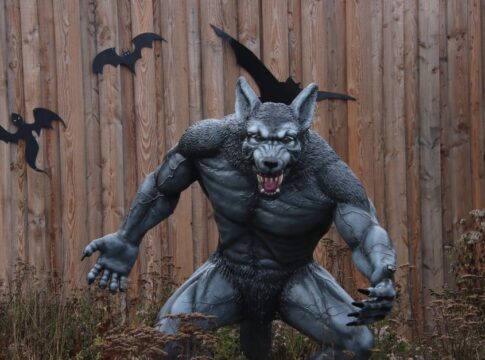
The Truth About Werewolf Legends Starting With Real Disease
By Trivia Daily, Staff Writer — Published November 6, 2026
Table of Contents
- Key Takeaways
- The Truth About Werewolf Legends and Hypertrichosis
- Rabies: The Behavioral Blueprint for Werewolf Myths
- Porphyria and the Vampire-Werewolf Connection
- Clinical Lycanthropy: When the Mind Believes the Myth
- Comparing Medical Conditions Behind Werewolf Myths
- Ergot Poisoning and Mass Werewolf Hysteria
- Frequently Asked Questions
The full moon rises, and in folklore across centuries, humans transform into savage wolves. But the truth about werewolf legends may be far more tragic than terrifying. Medical historians have discovered that several real diseases likely inspired these enduring myths, turning sick people into monsters in the eyes of their communities. What began as symptoms of rare genetic conditions and infections became the stuff of nightmares, proving that sometimes the most interesting trivia hides in the shadows between science and superstition.
From medieval Europe to modern diagnostic manuals, the connection between medical conditions and monster myths reveals surprising facts about how our ancestors tried to explain the unexplainable. Let’s explore the amazing reality behind the legend.
Key Takeaways
- Hypertrichosis, a rare genetic condition causing excessive hair growth across the body and face, closely matches descriptions of werewolf transformations in historical accounts.
- Rabies infection produces behaviors eerily similar to werewolf legends: aggression, fear of water, foaming at the mouth, and biting others to spread the condition.
- Porphyria, a group of blood disorders, can cause extreme light sensitivity, receding gums that make teeth appear fang-like, and reddish-brown urine.
- Clinical lycanthropy is a documented psychiatric condition where patients genuinely believe they can transform into animals, most commonly wolves.
- Ergot poisoning from contaminated grain may have caused hallucinations and convulsions that communities interpreted as demonic possession or transformation.
- Werewolf trials in medieval Europe often targeted people with visible deformities, mental illness, or epilepsy who were misunderstood and feared.
The Truth About Werewolf Legends and Hypertrichosis
Hypertrichosis remains one of the rarest genetic conditions in medical literature. People with this disorder grow thick hair over most of their body, including their face, creating an appearance that medieval populations would have found deeply unsettling. Only about 50 cases have been documented since the Middle Ages, making it extraordinarily uncommon.
Historical records describe several individuals with hypertrichosis who were displayed in royal courts or traveling shows. Their wolf-like appearance fed directly into existing folklore about humans who could change into beasts. The condition has two main forms: congenital (present from birth) and acquired (developing later in life). The congenital version produces the most dramatic transformation in appearance, with fine or thick hair covering the entire body except the palms and soles.
In an era without genetic testing or dermatological science, a child born covered in fur would have seemed like proof of supernatural forces. Communities already primed with werewolf stories would have seen their myths confirmed in flesh and blood.
Rabies: The Behavioral Blueprint for Werewolf Myths
Rabies presents perhaps the most compelling medical explanation for werewolf behavior. This viral infection, transmitted through animal bites (particularly from wolves and dogs in historical Europe), produces symptoms that read like a werewolf checklist. Infected individuals become violently aggressive, experience painful throat spasms that create fear of water, foam at the mouth, and often bite others in their confusion and rage.
The disease’s progression is genuinely horrifying. After an incubation period, victims develop fever and anxiety. Then comes the acute neurological phase: hallucinations, confusion, agitation, and the inability to swallow. Hydrophobia—the terror of water despite intense thirst—became so associated with rabies that the disease was once called hydrophobia itself.
Consider the medieval perspective. A person bitten by a wolf develops strange symptoms weeks later. They become unrecognizable, violent, and seem to reject their humanity. They bite others, spreading the curse. The full moon connection may have arisen because people spent more time outdoors during bright moonlit nights, increasing encounters with rabid animals. The facts align disturbingly well with werewolf lore.
Porphyria and the Vampire-Werewolf Connection
Porphyria encompasses a group of rare disorders affecting how the body produces heme, a component of hemoglobin. While more commonly associated with vampire legends, certain forms of porphyria share curious overlaps with werewolf mythology. Patients with severe congenital erythropoietic porphyria experience extreme photosensitivity, forcing them to avoid sunlight and venture out primarily at night.
The disease causes other transformative symptoms. Skin becomes fragile and scarred. Gums recede, making teeth appear prominent and fang-like. Some historical treatments involved drinking animal blood to compensate for heme deficiency, though this approach had no medical benefit. Fingers and facial features can become distorted. Hair growth may increase on the face and body.
Porphyria attacks often occur cyclically, which some researchers have speculatively linked to lunar cycles, though no scientific evidence supports this connection. What remains clear is that someone suffering a severe porphyria attack in medieval times would have looked dramatically altered—potentially monstrous to superstitious observers.
Clinical Lycanthropy: When the Mind Believes the Myth
Psychiatrists have documented a rare delusional disorder called clinical lycanthropy, where patients genuinely believe they transform into animals. Wolves are the most common animal in these delusions, though cases involving dogs, cats, horses, and birds have been reported in medical literature.
This condition typically appears alongside other psychiatric diagnoses: schizophrenia, bipolar disorder, or severe depression. Patients don’t physically transform, but they perceive themselves as animals and may behave accordingly—walking on all fours, howling, or refusing to eat human food. Brain imaging studies of lycanthropy patients sometimes show unusual activity in areas responsible for body perception and identity.
The condition demonstrates how powerful cultural myths shape psychological experiences. In regions where werewolf legends dominate folklore, lycanthropy manifests as wolf transformation. In other cultures, patients believe they become different animals prominent in local mythology.
Comparing Medical Conditions Behind Werewolf Myths
| Condition | Physical Symptoms | Behavioral Symptoms | Werewolf Connection |
|---|---|---|---|
| Hypertrichosis | Excessive hair growth on face and body | None directly related | Wolf-like appearance |
| Rabies | Foaming at mouth, fever | Aggression, biting, hydrophobia | Violent transformation, spreading through bites |
| Porphyria | Light sensitivity, prominent teeth, scarring | Confusion during attacks | Nocturnal activity, altered appearance |
| Clinical Lycanthropy | None | Belief in transformation, animal behavior | Psychological conviction of being a wolf |
Ergot Poisoning and Mass Werewolf Hysteria
Ergot fungus grows on rye and other grains, particularly in damp conditions. When consumed, ergot produces compounds similar to LSD, causing powerful hallucinations, convulsions, and a sensation of insects crawling under the skin. Medieval communities storing grain improperly would have been vulnerable to widespread ergot poisoning.
Entire villages could experience simultaneous symptoms: violent fits, visions of monsters, paranoid delusions, and uncontrollable movements. Someone suffering ergot-induced hallucinations might genuinely believe they were transforming into a beast or witness their neighbors doing so. This could explain some historical accounts of multiple werewolves appearing in the same region simultaneously.
The Salem witch trials have been partially attributed to ergot poisoning, and similar mechanisms may have fueled werewolf accusations. When communities couldn’t explain why previously normal people suddenly behaved bizarrely, supernatural transformation provided a frightening but comprehensible answer.
Frequently Asked Questions
What disease makes people look like werewolves?
Hypertrichosis, an extremely rare genetic condition, causes excessive hair growth across the entire body and face, creating a wolf-like appearance. Only about 50 cases have been documented throughout recorded history, making it one of the rarest human conditions.
Did rabies contribute to werewolf legends?
Yes, rabies likely played a significant role in werewolf mythology. The disease causes aggression, foaming at the mouth, fear of water, and the compulsion to bite others—all behaviors associated with werewolf transformations in folklore. Transmission through wolf or dog bites would have seemed like a curse spreading from person to person.
Is clinical lycanthropy a real medical condition?
Clinical lycanthropy is a documented psychiatric disorder where patients believe they can transform into animals, most commonly wolves. It typically occurs alongside conditions like schizophrenia or bipolar disorder and represents a delusion rather than an actual physical transformation.
Why were werewolf legends so common in Europe?
Europe had large wolf populations that posed real threats to rural communities, creating a foundation for wolf-related fears. Combined with rare medical conditions, rabies outbreaks, and limited scientific understanding, these factors created perfect conditions for werewolf mythology to flourish and persist across generations.
The next time you encounter a werewolf in fiction, remember the real people who suffered behind the myth. Their medical conditions, misunderstood and feared, transformed them into monsters in the eyes of their communities. Science has since revealed the truth, but the legends persist—a reminder that our greatest fears often begin with what we cannot explain.