
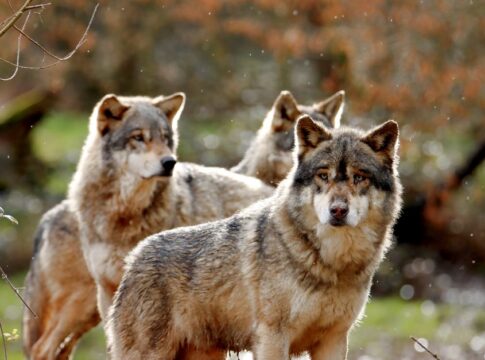
9 Fascinating Facts About Wolves Hunting in Packs
By Trivia Daily, Animals Desk — Published October 7, 2026
Table of Contents
- Key Takeaways
- Wolves Hunting Packs Rely on Family Structure, Not Random Groups
- The Hunt Success Rate Reveals the Challenge of Predation
- Frequently Asked Questions
Few sights in nature rival the coordinated precision of wolves hunting packs in action. These remarkable predators have evolved a hunting strategy so sophisticated that it rivals the tactics of human military units. When a pack of gray wolves sets its sights on prey, every member plays a specific role in a ballet of teamwork that has been refined over thousands of years. Understanding how these creatures hunt reveals not just their intelligence, but the intricate social bonds that make them one of the animal kingdom’s most successful cooperative hunters.
From the windswept tundra of the Arctic to the dense forests of North America, wolves demonstrate behavior that challenges our assumptions about wildlife. Their habitat may vary, but their hunting techniques remain consistently impressive across different species and environments.
Key Takeaways
- Wolf packs typically consist of a family unit with clearly defined social roles that directly influence hunting success
- Wolves can travel up to 30 miles in a single day while tracking prey, demonstrating remarkable endurance
- Pack hunting allows wolves to take down prey up to ten times their own body weight
- Communication during hunts involves subtle body language, eye contact, and vocalizations that coordinate group movements
- Only about one in ten wolf hunts actually succeeds, making persistence a critical survival trait
- Wolves select the most vulnerable prey through careful observation before committing to an attack
Wolves Hunting Packs Rely on Family Structure, Not Random Groups
Contrary to popular belief, wolf packs aren’t collections of unrelated animals competing for dominance. A typical pack is actually an extended family consisting of a breeding pair and their offspring from multiple years. This family structure is crucial to hunting success. The breeding pair, often called the alpha male and female, lead hunts based on experience rather than aggression. Younger wolves learn by observing their parents and older siblings, creating a knowledge transfer system that improves with each generation.
Pack size directly affects hunting strategy. Smaller packs of three to five wolves typically target deer and smaller ungulates. Larger packs of eight to fifteen members can coordinate attacks on massive prey like bison or moose. The animals adapt their tactics based on available personnel, much like a sports team adjusts its playbook based on who’s on the field.
The Hunt Success Rate Reveals the Challenge of Predation
Wolf hunts fail far more often than they succeed. Research on various wolf populations shows success rates hovering around 10 to 20 percent, depending on prey species and environmental conditions. This low success rate explains why wolves must hunt frequently and travel vast distances. A single kill must sustain the entire pack for days, making each successful hunt critical for survival.
The difficulty of hunting also shapes wolf behavior in unexpected ways. Wolves are opportunistic and will scavenge when possible, conserving energy for when active hunting becomes necessary. They’ve learned through evolution that efficiency matters as much as prowess.
1. Wolves Use a “Test and Chase” Strategy to Identify Weak Prey
Before committing to a full pursuit, wolves engage in what biologists call testing behavior. The pack approaches a herd and observes how individuals react. Healthy animals typically stand their ground or flee with strong, coordinated movements. Wolves watch for hesitation, limping, or signs of illness. Once they identify a vulnerable target—often the very young, elderly, or injured—they focus their efforts exclusively on that individual. This strategy conserves energy and maximizes success probability. The testing phase can last minutes or even hours as wolves patiently wait for prey to reveal weakness.
2. Pack Members Assume Specialized Roles During the Hunt
Within a hunting pack, wolves naturally divide responsibilities based on age, experience, and physical capability. The most experienced hunters typically lead the chase, setting the pace and making split-second decisions about pursuit angles. Younger, faster wolves often flank the prey, cutting off escape routes and driving the animal toward waiting pack members. Larger, more powerful wolves deliver the final attack. This division of labor isn’t rigidly assigned but emerges organically from each wolf’s strengths and the pack’s collective experience hunting together.
3. Communication Happens Largely Through Silent Signals
While wolves are famous for howling, actual hunts proceed mostly in silence. Vocalizations would alert prey and ruin the element of surprise. Instead, wolves rely on subtle body language, ear positions, tail movements, and direct eye contact to coordinate their movements. A slight shift in the lead wolf’s posture can signal the moment to break into pursuit. This silent communication system is so refined that pack members can adjust their positions and tactics without a single sound, moving as one cohesive unit through complex terrain.
4. Wolves Can Sustain Pursuit Speeds of 35 Miles Per Hour
Though not the fastest predators in nature, wolves excel at endurance running. They can maintain speeds of 25 to 35 miles per hour for extended distances, outlasting prey that may sprint faster initially but tire quickly. Their large paws act like snowshoes, distributing weight effectively across snow and soft ground where hoofed prey may flounder. The cardiovascular system of a wolf is adapted for sustained exertion, with a large heart and efficient lungs that process oxygen effectively during long chases. Some pursuits cover several miles before the prey is brought down or escapes.
5. Pack Hunting Efficiency Varies Dramatically by Prey Species
The success rate of wolf hunts changes significantly depending on what they’re hunting. Studies show wolves hunting elk succeed roughly 20 percent of the time, while hunts targeting moose succeed only about 8 percent of the time due to the moose’s size and defensive capabilities. Conversely, wolves hunting smaller prey like deer may achieve success rates near 25 percent. These statistics demonstrate how wolves constantly calculate risk versus reward, sometimes abandoning hunts against formidable prey to conserve energy for more favorable opportunities.
| Prey Species | Approximate Hunt Success Rate | Pack Size Typically Required |
|---|---|---|
| White-tailed Deer | 20-25% | 3-5 wolves |
| Elk | 15-20% | 5-8 wolves |
| Moose | 8-12% | 8-12 wolves |
| Bison | 5-10% | 10+ wolves |
6. Wolves Demonstrate Remarkable Spatial Awareness and Memory
Successful pack hunting requires wolves to maintain mental maps of their territory spanning hundreds of square miles. They remember where prey congregates seasonally, which terrain features offer tactical advantages, and where escape routes might lead. During a chase, wolves use this spatial intelligence to predict where prey will run and position themselves accordingly. Some researchers believe wolves can even anticipate prey behavior based on past hunts, essentially learning the “playbook” of different species and adjusting their tactics to counter specific defensive strategies.
7. The Killing Bite Targets Specific Anatomical Locations
When wolves finally close on their prey, they employ precise techniques to bring down animals much larger than themselves. Large prey are typically attacked from behind, with wolves targeting the hindquarters and flanks to slow the animal. Once the prey stops or falls, wolves deliver bites to the throat or nose, causing suffocation. This method is more humane than it might appear, often resulting in rapid unconsciousness. Smaller prey may be killed with a single crushing bite to the neck or skull. These techniques are learned behaviors passed from experienced hunters to younger pack members through observation and practice.
8. Post-Kill Feeding Follows a Social Hierarchy
After a successful hunt, feeding order reflects pack dynamics but is more nuanced than simple dominance. The breeding pair and any pups typically eat first, ensuring the pack’s reproductive future. However, wolves who contributed most significantly to the kill often gain priority access as well. Interestingly, wolves can consume up to 20 pounds of meat in a single feeding, gorging when food is available to sustain them through lean periods. They often cache excess meat by burying it, returning days later when hungry again. This behavior demonstrates forward planning rare in the animal kingdom.
9. Cooperative Hunting Shaped Wolf Evolution and Intelligence
The demands of pack hunting have driven the evolution of wolf intelligence and social complexity. Wolves possess problem-solving abilities that rival primates in certain contexts, particularly those involving cooperation and strategic thinking. The need to coordinate hunts, communicate silently, remember vast territories, and learn from experience has selected for larger brains and more sophisticated neural processing than solitary predators possess. This cognitive evolution extends beyond hunting—wolves demonstrate empathy, play, and even what appears to be mourning behavior, all traits that strengthen pack bonds and improve collective survival.
Frequently Asked Questions
How many wolves are typically in a hunting pack?
Most wolf packs contain between four and nine individuals, though packs can range from as few as two to as many as fifteen members. Pack size depends on prey availability, habitat, and how many offspring have survived to hunting age.
Do wolves always hunt in packs?
No, wolves sometimes hunt alone or in pairs, especially when targeting smaller prey like rabbits or rodents. However, pack hunting is essential for taking down large ungulates like elk, moose, or bison that provide enough food to sustain the entire family group.
How far will wolves travel to hunt?
Wolves routinely travel 20 to 30 miles in a single day while hunting, and their territories can span anywhere from 50 to over 1,000 square miles depending on prey density. In areas where prey is scarce, wolves cover even greater distances to find food.
What happens to injured wolves during a hunt?
Injured wolves typically remain at the den or a rendezvous site while the pack hunts. Healthy pack members often return with food for injured or elderly wolves, demonstrating the species’ remarkable capacity for cooperation and care beyond immediate hunting needs.
The next time you hear wolves howling in the distance—or even in a nature documentary—remember that you’re listening to one of evolution’s most successful experiments in teamwork. These animals have turned cooperation into an art form, proving that in nature, working together often beats going it alone.