
7 Bizarre Facts About Axolotls Regenerating Their Brains
By Trivia Daily, Animals Desk — Published November 7, 2026
Table of Contents
- Key Takeaways
- The Science Behind Bizarre Axolotls Regenerating Neural Tissue
- 1. They Regenerate Functional Brain Tissue, Not Just Scar Tissue
- 2. Memory Survives Complete Brain Section Removal
- 3. Radial Glia Act as Master Regeneration Coordinators
- 4. The Process Takes About Two Months From Injury to Full Function
- 5. They Can Regenerate the Same Brain Region Multiple Times
- 6. Neoteny May Be Key to Their Regenerative Superpowers
- 7. Their Endangered Status Threatens Future Research
- Comparing Regenerative Abilities Across Species
- Frequently Asked Questions
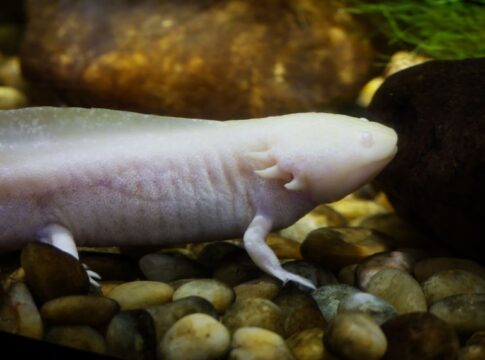
The axolotl, a perpetually grinning salamander native to Mexico, possesses one of nature’s most extraordinary superpowers: the ability to regenerate entire portions of its brain without losing memories or cognitive function. While many animals can regrow limbs or tails, these bizarre axolotls regenerating brain tissue represent something far more remarkable—a feat that has captivated scientists studying neural repair and has positioned this species as a crucial model for understanding tissue regeneration in wildlife.
This aquatic creature doesn’t just heal wounds. It rebuilds complex neural architecture that took evolution millions of years to develop, doing so in a matter of weeks. The mechanisms behind this ability challenge everything we thought we knew about the limits of animal recovery and offer tantalizing clues about dormant regenerative pathways that might exist in other creatures—including humans.
Key Takeaways
- Axolotls can regenerate up to half of their brain, including the cerebrum, without losing memories or learned behaviors.
- These animals produce specialized cells called radial glia that act as neural stem cells during brain regeneration.
- Unlike mammals, axolotls suppress scar tissue formation, allowing perfect reconstruction of brain architecture.
- Brain regeneration in axolotls takes approximately 60 days from injury to full functional recovery.
- The species remains critically endangered in its native habitat despite being common in laboratories worldwide.
- Axolotls retain juvenile characteristics throughout their lives, a condition called neoteny that may enable their regenerative abilities.
The Science Behind Bizarre Axolotls Regenerating Neural Tissue
When an axolotl suffers brain damage, its body initiates a carefully orchestrated biological response that seems almost magical. Within hours of injury, cells near the wound site begin transforming into a regeneration-competent state. Unlike mammals that form glial scars—dense barriers of tissue that prevent neural regrowth—axolotls completely avoid this dead-end healing strategy.
The secret lies in how these creatures handle inflammation. Mammalian brains respond to injury with intense inflammatory responses that ultimately create permanent scar tissue. Axolotls, by contrast, mount a controlled inflammatory reaction that clears debris without triggering the molecular signals that would halt regeneration. This measured response allows specialized support cells called radial glia to proliferate and differentiate into new neurons, effectively rebuilding lost brain regions from scratch.
Researchers have identified several genes unique to the axolotl regeneration process, many of which are either absent or dormant in mammals. These genetic switches control everything from cell division rates to the spatial organization of new tissue, ensuring that regenerated brain sections integrate seamlessly with existing structures.
1. They Regenerate Functional Brain Tissue, Not Just Scar Tissue
Perhaps the most astonishing aspect of axolotl brain regeneration is that the new tissue actually works. When scientists remove portions of an axolotl’s telencephalon—the region responsible for complex behaviors—the animal rebuilds it completely. New neurons form proper connections with existing neural networks, synapses establish functional communication pathways, and the regenerated tissue becomes electrically active. Tests on axolotls that have undergone brain regeneration show they retain learned behaviors and can acquire new ones, proving the regenerated tissue isn’t merely decorative filler but genuine, operational brain matter.
2. Memory Survives Complete Brain Section Removal
In experiments that sound like science fiction, researchers have removed significant portions of axolotl brains only to discover that the animals retain memories formed before the injury. After regeneration completes, these creatures still recognize familiar environments and remember conditioned responses they learned weeks earlier. This suggests that memory storage in axolotls might be more distributed throughout the nervous system than previously understood, or that memory traces can survive in remaining brain tissue and successfully integrate with regenerated sections—a phenomenon that challenges our fundamental understanding of how animal brains encode and retrieve information.
3. Radial Glia Act as Master Regeneration Coordinators
The cellular heroes of axolotl brain regeneration are radial glia, specialized support cells that most animals lose after embryonic development. Axolotls retain these cells throughout their lives, maintaining a regenerative toolkit that mammals abandon after birth. When brain injury occurs, radial glia spring into action, proliferating rapidly and differentiating into various neural cell types including neurons, oligodendrocytes, and astrocytes. These versatile cells essentially recreate the developmental processes that originally built the brain, following molecular blueprints that guide proper tissue architecture and cellular organization.
4. The Process Takes About Two Months From Injury to Full Function
Axolotl brain regeneration follows a predictable timeline that researchers have mapped in detail. The first week involves wound closure and initial cell proliferation. Weeks two through four see intense neurogenesis as new neurons are born and begin extending processes. By week six, these neurons start forming synaptic connections with existing neural networks. Full functional integration typically completes around the 60-day mark, though the exact duration varies with injury size and the animal’s age. Younger axolotls regenerate slightly faster than older individuals, though even aged specimens retain remarkable regenerative capacity compared to any mammalian species.
5. They Can Regenerate the Same Brain Region Multiple Times
The regenerative capacity of axolotls doesn’t diminish with repeated injuries. Scientists have documented cases where the same brain region was removed and successfully regenerated multiple times in succession, with each regeneration cycle producing functional tissue. This repeatable regeneration suggests the underlying genetic and cellular mechanisms remain robust and don’t exhaust themselves through use—a stark contrast to the limited healing responses seen in mammals, where even minor brain injuries often result in permanent damage and progressive scar tissue accumulation.
6. Neoteny May Be Key to Their Regenerative Superpowers
Axolotls exhibit neoteny, meaning they retain juvenile characteristics throughout their entire lives, including external gills and aquatic behavior patterns. This perpetual youth extends to their cellular biology. While most amphibians undergo metamorphosis that switches off embryonic regeneration genes, axolotls never flip that switch. They maintain expression of developmental genes and cellular plasticity typically seen only in embryos and larvae. This arrested development effectively keeps their bodies in a regeneration-permissive state indefinitely, allowing them to heal injuries that would be catastrophic in metamorphosed amphibians or mammals.
7. Their Endangered Status Threatens Future Research
Despite being ubiquitous in research laboratories worldwide, wild axolotls are critically endangered in their native habitat—the lake complex of Xochimilco near Mexico City. Urbanization, water pollution, and the introduction of invasive species have decimated wild populations to the point where field surveys sometimes fail to find a single individual. This creates a troubling paradox: the species that might unlock secrets of neural regeneration for human medicine exists primarily in captivity, with its natural ecosystem on the verge of losing this remarkable creature forever. Conservation efforts are underway, but the axolotl’s future in nature remains uncertain.
Comparing Regenerative Abilities Across Species
| Species | Brain Regeneration | Limb Regeneration | Organ Regeneration |
|---|---|---|---|
| Axolotl | Extensive (up to 50%) | Complete | Heart, spinal cord, eyes |
| Zebrafish | Limited regions | Fins only | Heart, retina |
| Planarian Flatworm | Complete | Complete | All organs |
| Human | None | None | Liver (partial) |
Frequently Asked Questions
How long do axolotls live?
Axolotls typically live 10 to 15 years in captivity with proper care, though some individuals have reached 20 years. Their lifespan in the wild is less well documented due to their critically endangered status.
Can axolotls regenerate their hearts?
Yes, axolotls can regenerate damaged heart tissue, including portions of the ventricle. This cardiac regeneration occurs without significant scarring, similar to their brain regeneration process.
Why can’t humans regenerate like axolotls?
Humans evolved complex immune responses and scar formation mechanisms that prioritize rapid wound closure over perfect regeneration. While we possess some of the same genes as axolotls, they’re either inactive or regulated differently in mammals.
Do axolotls feel pain during regeneration?
Axolotls possess nociceptors (pain receptors) and likely experience some sensation during injury, though their exact subjective experience remains unknown. The regeneration process itself appears to proceed without obvious distress behaviors once initial healing begins.
The axolotl’s grinning face might be nature’s way of keeping a remarkable secret: that the supposed permanence of brain damage isn’t an inviolable law but merely a limitation some species have overcome. Every regenerated neuron in an axolotl brain whispers that the boundaries between possible and impossible in biology are far more flexible than we imagine.