
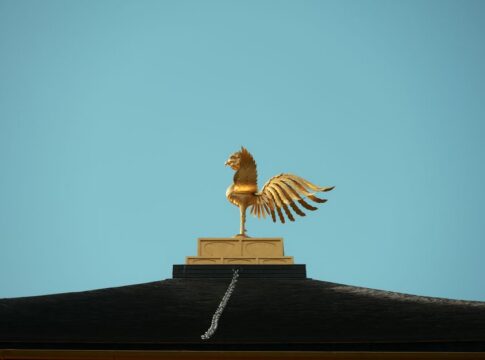
The Truth About Phoenix Myths Coming From Flamingo Sightings
By Trivia Daily, Staff Writer — Published November 7, 2026
Table of Contents
- Key Takeaways
- The Truth About Phoenix Myths and Their Ancient Origins
- Why Flamingos Captivated Ancient Observers
- Comparing Phoenix Descriptions Across Cultures
- The Real Science Behind Flamingo Coloring
- What Likely Inspired Phoenix Legends
- Frequently Asked Questions
Could one of mythology’s most spectacular creatures—the phoenix, a bird reborn from its own ashes—have roots in something as earthly as a flamingo? While this surprising theory makes for fascinating trivia, the truth about phoenix myths is far more complex than a simple case of mistaken identity. The connection between these vibrant pink birds and the legendary firebird reveals interesting facts about how ancient cultures interpreted the natural world around them.
The idea that flamingos inspired phoenix legends captures our curiosity because it seems so plausible at first glance. Both birds share striking visual characteristics: brilliant coloring, impressive size, and behaviors that might seem otherworldly to observers unfamiliar with them. Yet discovering the real origins of phoenix mythology requires us to explore multiple cultures, natural phenomena, and the amazing ways humans have always tried to explain the unexplained.
Key Takeaways
- The phoenix myth appears independently across Egyptian, Greek, Arabian, and Chinese cultures, each with distinct characteristics that don’t align neatly with flamingo observations.
- Flamingos get their pink and red coloring from carotenoid pigments in their diet of algae and crustaceans, not from fire or flames.
- Ancient Egyptian Bennu bird mythology, often linked to phoenix legends, was associated with the sun god Ra and represented cyclical renewal rather than literal rebirth from ashes.
- Flamingos engage in synchronized group displays and nest-building behaviors that create mounds of mud, which from a distance might resemble rising structures or pyres.
- The phoenix legend more likely stems from multiple sources including solar symbolism, observations of various bird species, and metaphorical representations of cosmic cycles.
- Modern genetic studies confirm flamingos are most closely related to grebes, not to any mythical interpretations ancient peoples might have assigned them.
The Truth About Phoenix Myths and Their Ancient Origins
Phoenix mythology doesn’t trace back to a single source. The ancient Egyptians revered the Bennu bird, a heron-like creature associated with creation and the sun. This bird was said to appear at the beginning of each new cycle, rising from the waters of chaos. The Greeks later encountered Egyptian mythology and transformed the Bennu into their own phoenix—a bird that lived for 500 years before building a nest of aromatic wood, setting it ablaze, and emerging renewed from the flames.
These descriptions don’t match flamingo behavior or appearance particularly well. Flamingos are wading birds that feed in shallow water, standing on impossibly thin legs while filtering tiny organisms through specialized beaks. They don’t build nests from aromatic branches. They don’t live for centuries. And they certainly don’t burst into flames.
Arabian and Chinese cultures developed their own firebird legends independently. The Arabian phoenix was described as eagle-sized with gold and red plumage. The Chinese Fenghuang combined features of multiple birds and represented virtue and grace. This parallel development across distant cultures suggests the phoenix represents something more universal than observations of any single species—it embodies humanity’s fascination with renewal, immortality, and transformation.
Why Flamingos Captivated Ancient Observers
Flamingos do possess characteristics that might inspire wonder. Their coloring ranges from pale pink to deep crimson, depending on their diet and species. Greater flamingos can stand nearly five feet tall with wingspans exceeding five feet. When thousands gather together—as they often do—the sight is genuinely spectacular, creating what looks like a living carpet of flame-colored birds across wetlands and salt flats.
Their breeding behavior adds to the spectacle. Flamingos perform elaborate synchronized dances, with hundreds or thousands moving in unison—head-flagging, wing-saluting, and marching in formation. They build cone-shaped mud nests that rise above shallow water, and when viewed from a distance, a flamingo colony with its mounds and masses of red-pink birds might evoke images of fire and rising structures.
But these behaviors, while amazing, don’t explain the specific details of phoenix mythology. The phoenix was solitary, not colonial. It was associated with the sun and fire, not water and mud. Ancient texts describe the phoenix as unique—only one existed at any time—whereas flamingos gather by the thousands.
Comparing Phoenix Descriptions Across Cultures
| Culture | Name | Key Characteristics | Symbolic Meaning |
|---|---|---|---|
| Egyptian | Bennu | Heron-like, associated with flooding of the Nile | Creation, renewal, solar cycles |
| Greek | Phoenix | Eagle-sized, gold and red, lives 500 years | Immortality, resurrection |
| Arabian | Phoenix (Anka) | Enormous bird, aromatic nest, self-immolation | Rebirth, transformation |
| Chinese | Fenghuang | Composite of multiple birds, peacock-like tail | Virtue, harmony, prosperity |
The Real Science Behind Flamingo Coloring
Flamingo coloring comes from chemistry, not magic. These birds consume enormous quantities of algae, diatoms, and small crustaceans rich in carotenoid pigments—the same compounds that make carrots orange and tomatoes red. Their digestive systems break down these pigments and deposit them in feathers, skin, and even egg yolks.
Captive flamingos fed diets lacking carotenoids gradually fade to white or pale gray. Zoos supplement their food with natural or synthetic carotenoids to maintain the vibrant coloring visitors expect. This demonstrates that the “flame-like” appearance is entirely dietary and environmental, not supernatural.
Different flamingo species show different color intensities. Caribbean flamingos display the brightest coral-red hues, while lesser flamingos can appear almost crimson. Chilean flamingos tend toward pale pink with bright red joints. These variations depend on specific carotenoid types in their regional food sources—beta-carotene, canthaxanthin, and astaxanthin create the spectrum from pink to red.
What Likely Inspired Phoenix Legends
Rather than flamingos, phoenix mythology probably emerged from several converging sources. Solar symbolism played a major role—many ancient cultures observed the sun “dying” each evening and being “reborn” each morning. Birds that appeared at sunrise or were associated with the east carried special significance.
Some researchers suggest observations of birds of paradise, whose brilliant plumage and remote habitats made them seem magical to ancient traders who encountered them. Others point to the practice of cremation and the belief that smoke carried souls skyward, merged with observations of birds rising on thermal updrafts.
The phoenix served a psychological and spiritual function: it represented hope that death wasn’t final, that destruction could lead to renewal, that endings were also beginnings. This metaphorical power explains why the symbol persisted across cultures and millennia, far outlasting any specific ornithological observation that might have sparked it.
Frequently Asked Questions
Did ancient Egyptians actually see flamingos in the Nile region?
Yes, flamingos inhabited wetlands along the Nile and in the Mediterranean region, and ancient Egyptians would have been familiar with them. However, the Bennu bird was consistently depicted as heron-like, not resembling flamingos in ancient artwork or hieroglyphic descriptions.
How long do flamingos actually live?
Wild flamingos typically live 20 to 30 years, while captive flamingos can reach 50 years or more with proper care. This is impressive but nowhere near the 500-year lifespan attributed to the mythical phoenix in Greek accounts.
What is the largest gathering of flamingos ever recorded?
East Africa’s soda lakes, particularly Lake Nakuru and Lake Bogoria in Kenya, have hosted gatherings of over one million lesser flamingos at peak times, creating one of nature’s most spectacular wildlife displays.
Are there any birds that actually practice behaviors similar to phoenix rebirth?
No bird literally rises from its own ashes, but some species like certain megapodes bury their eggs in composting vegetation or volcanic soil, where decomposition heat incubates them—a behavior that involves heat and “rising” young that ancient observers might have found mysterious.
The connection between flamingos and phoenix legends reminds us that myths often contain kernels of natural observation wrapped in layers of cultural meaning and metaphor. While these elegant pink waders likely contributed to ancient wonder about the natural world, the phoenix represents something deeper than any single species—humanity’s eternal fascination with transformation, renewal, and the beautiful impossibility of rising from our own ashes.