
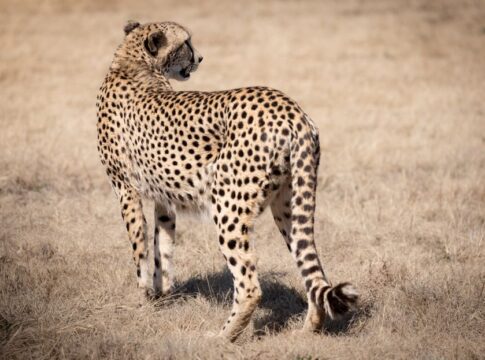
9 Record-Breaking Facts About Cheetah Speed and Hunting
By Trivia Daily, Animals Desk — Published September 18, 2026
Table of Contents
- Key Takeaways
- Record-Breaking Cheetah Speed: The Mechanics of Velocity
- Hunting Strategy and Success Rates
- Unique Physical Adaptations
- Speed Comparison: Cheetah vs. Other Fast Animals
- Conservation Challenges for the World’s Fastest Cat
- Frequently Asked Questions
The cheetah holds the undisputed crown as the fastest land animal on Earth, but its speed is just the beginning of an extraordinary evolutionary story. This sleek predator has evolved into nature’s ultimate sprinter, with a body so specialized for velocity that nearly every aspect of its anatomy serves the singular purpose of catching prey in short, explosive bursts. Understanding what makes this record-breaking cheetah such an exceptional hunter reveals fascinating insights into animal behavior, adaptation, and the delicate balance of predator and prey in the wild.
From its specialized claws to its oversized heart, the cheetah represents millions of years of evolution honing a single strategy to perfection. Yet this same specialization that makes it a record holder also creates vulnerabilities that threaten its survival in changing habitats.
Key Takeaways
- Cheetahs can accelerate from 0 to 60 mph in just three seconds, faster than most sports cars
- Their top speed reaches approximately 70 mph, though they can only maintain this pace for 20-30 seconds
- Cheetahs have semi-retractable claws that function like running spikes for traction during high-speed chases
- This species has the lowest hunting success rate among big cats, succeeding only about 40-50% of the time
- Their lightweight build makes them vulnerable to losing kills to larger predators like lions and hyenas
- Cheetahs cannot roar like other big cats due to a fixed voice box structure
Record-Breaking Cheetah Speed: The Mechanics of Velocity
When a cheetah launches into a sprint, its body transforms into a biological missile. The spine acts like a spring, flexing and extending with each stride to maximize leg extension. During a full sprint, all four paws leave the ground twice per stride—once when the legs are fully extended and again when they’re bunched beneath the body. This creates a bounding motion that covers up to 25 feet in a single stride.
The tail functions as a rudder. Weighing relatively little but stretching nearly three feet long, it acts as a counterbalance during sharp turns at high speed. When chasing zigzagging prey like Thomson’s gazelles, the cheetah whips its tail in the opposite direction of the turn, maintaining stability that would otherwise be impossible at such velocities. This adaptation allows the animal to make turns while running at speeds that would cause most creatures to tumble.
Enlarged nasal passages and lungs enable rapid oxygen intake during the chase. The heart is proportionally larger than in other cats, pumping oxygen-rich blood efficiently to working muscles. After a high-speed chase, a cheetah must rest for several minutes, panting heavily to cool down and recover from the immense physical exertion—its body temperature can rise dangerously high during these sprints.
Hunting Strategy and Success Rates
Cheetahs hunt primarily during daylight hours, particularly in early morning and late afternoon. This timing helps them avoid competition with nocturnal predators like lions and leopards. They rely on vision rather than scent to locate prey, scanning the savanna from elevated positions like termite mounds or fallen trees.
The hunting process begins with a careful stalk. Unlike the explosive speed of the final chase, the approach phase requires patience and stealth. The cheetah creeps to within 100-200 feet of its target before launching the sprint. If the prey notices too early and flees, the cheetah often abandons the chase rather than waste precious energy on a low-probability pursuit.
Despite their incredible speed, cheetahs succeed in only about 40-50% of hunts. This relatively low success rate stems from several factors: prey animals have evolved equally impressive escape tactics, the cheetah’s lightweight build limits endurance, and the physical toll of sprinting means each attempt carries significant cost. A failed hunt isn’t just a missed meal—it’s wasted calories and elevated stress on an already taxed system.
Unique Physical Adaptations
1. Semi-Retractable Claws Provide Traction Like Athletic Spikes
Unlike other cats that fully retract their claws, cheetahs have claws that remain partially exposed at all times. This unique feature functions exactly like the cleats worn by human sprinters, digging into the ground to provide traction during acceleration and sharp directional changes. The trade-off is that these claws wear down over time and cannot be used for climbing trees, limiting the cheetah’s ability to escape threats or cache kills out of reach from scavengers.
2. Enlarged Heart and Lungs Support Extreme Cardiovascular Demands
The cheetah’s cardiovascular system is proportionally larger than that of other big cats. The heart pumps with exceptional efficiency, delivering oxygen to muscles at rates necessary to sustain sprinting speeds that would cause cardiac failure in less-adapted species. The lungs and nasal passages are similarly enlarged, creating what amounts to a biological turbocharger that processes air rapidly during the explosive energy demands of a chase.
3. Lightweight Skeleton Sacrifices Strength for Speed
Evolution has pared down the cheetah’s skeleton to minimize weight while maintaining structural integrity for running. Bones are lighter and more slender than those of similarly-sized cats. This adaptation comes with a significant disadvantage: cheetahs cannot defend their kills against larger predators. Lions, hyenas, and even leopards regularly steal freshly caught prey from cheetahs, who must choose between fighting—and risking injury—or abandoning their hard-won meal.
4. Black “Tear Marks” Reduce Sun Glare
The distinctive black stripes running from the inner corners of each eye down to the mouth serve a practical function. These markings help reduce glare from the sun, functioning like the black grease athletes apply under their eyes. Since cheetahs hunt during daylight hours on open grasslands where sunlight reflects intensely off the ground, this adaptation helps maintain visual focus on prey during high-speed pursuits.
5. Fixed Voice Box Prevents Roaring
Cheetahs cannot roar like lions, tigers, or leopards. The structure of their voice box lacks the specialized ligament that allows true roaring. Instead, cheetahs produce a range of other vocalizations including chirps, stutters, growls, and purrs. The chirping sound, remarkably bird-like, is used by mothers to call cubs and by individuals to locate each other across the savanna.
6. Small Head Houses Shortened Jaw With Reduced Bite Force
To minimize weight and maintain aerodynamic efficiency, the cheetah’s skull is relatively small with shortened jaws. This design reduces bite force compared to other big cats. While a leopard or lion can crush bone and drag heavy carcasses, the cheetah’s bite is primarily designed to clamp onto the throat of prey and suffocate it. This limitation means cheetahs typically target smaller prey that can be dispatched quickly without prolonged struggle.
7. Flexible Spine Extends Stride Length
The cheetah’s spine is extraordinarily flexible, functioning as a spring that stores and releases energy with each bound. This flexibility allows the shoulder blades and hip joints to extend far beyond what rigid-spined animals can achieve. During a sprint, the spine curves and straightens dramatically, effectively lengthening each stride and contributing significantly to the animal’s top speed.
8. Non-Slip Foot Pads Enhance Grip
The pads on a cheetah’s feet are hard and ridged, similar to tire treads. These specialized pads provide additional grip during acceleration and turning. Combined with the semi-retractable claws, this adaptation creates a comprehensive traction system that allows the cheetah to maintain control at speeds where other animals would slip and stumble.
9. Acute Vision Spots Prey From Great Distances
Cheetahs possess exceptional eyesight adapted for spotting prey across the open plains of their habitat. The eyes face forward, providing excellent depth perception crucial for judging distances during high-speed chases. A high concentration of nerve cells in the area of the retina responsible for sharp central vision allows cheetahs to track fast-moving prey and navigate around obstacles while sprinting.
Speed Comparison: Cheetah vs. Other Fast Animals
| Animal | Top Speed | Habitat |
|---|---|---|
| Cheetah | 70 mph | African savanna |
| Pronghorn Antelope | 55 mph | North American plains |
| Springbok | 55 mph | Southern African grasslands |
| Lion | 50 mph | African savanna and woodland |
| Greyhound | 45 mph | Domesticated |
Conservation Challenges for the World’s Fastest Cat
The same specializations that make cheetahs extraordinary sprinters also create vulnerabilities in a changing world. Habitat loss fragments the open grasslands these animals require for hunting. Reduced prey populations force cheetahs into closer contact with human settlements, where livestock predation brings them into conflict with farmers and ranchers.
Genetic diversity represents another serious concern. Research indicates that cheetahs went through a population bottleneck thousands of years ago, resulting in remarkably low genetic variation across the species. This lack of diversity makes the entire population vulnerable to diseases and reduces adaptability to environmental changes. Conservation efforts by organizations worldwide focus on protecting habitat corridors, reducing human-wildlife conflict, and maintaining viable populations across the cheetah’s remaining range in Africa and a small population in Iran.
Frequently Asked Questions
How long can a cheetah maintain its top speed?
A cheetah can only maintain its maximum speed of approximately 70 mph for about 20 to 30 seconds before its body overheats and muscle fatigue forces it to stop. Most chases last less than a minute and cover distances of 600 feet or less.
Can cheetahs climb trees like other big cats?
Cheetahs rarely climb trees and are poor climbers compared to leopards. Their semi-retractable claws, designed for traction during running, do not provide the grip needed for climbing. They occasionally rest in low branches but cannot scale trees to escape danger or store kills.
Why don’t cheetahs attack humans?
Cheetahs are naturally timid and avoid confrontation with larger animals, including humans. Their lightweight build makes them vulnerable in physical conflicts, so they’ve evolved to flee rather than fight when threatened. Attacks on humans are extremely rare and typically involve cornered animals or mothers protecting cubs.
How do cheetahs differ from leopards?
Cheetahs have solid black spots, tear marks on their faces, and slender builds, while leopards have rosette-shaped markings, no tear marks, and stockier, more muscular bodies. Behaviorally, cheetahs hunt during the day on open plains, whereas leopards are nocturnal and prefer woodland habitats where they climb trees regularly.
The cheetah’s record-breaking speed represents one of nature’s most dramatic examples of evolutionary specialization—a creature so perfectly adapted to a single strategy that its entire existence depends on the sprint. Every adaptation that makes it faster also makes it more vulnerable, a reminder that in the wild, being the best at one thing often means accepting trade-offs everywhere else.